
September 2026 Newsletter
Change Is in the Air
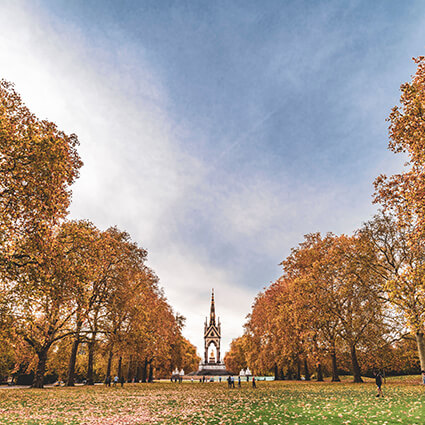
Change is in the air, and not just in the turning autumn leaves, cooler mornings and steadily shortening days. There can be a change in us, too.
September often feels like a month of transition. Summer holidays come to an end, schools and workplaces return to their usual rhythm, daylight begins to retreat and the first proper chill arrives in the morning air. Even when nothing significant has changed in our own lives, the world around us can suddenly feel as though it has shifted gear.
Our bodies notice these transitions. Light is one of the important signals regulating our circadian rhythm, influencing sleep, alertness and the timing of many physiological processes. Cooler weather can change how much time we spend outside and how readily we move, while fuller diaries can affect our sleep, meals, activity and opportunities to recover.
There can be an emotional shift as well. Some people welcome autumn and the return to routine; others notice a little less energy, a change in mood or simply a sense that the openness of summer has disappeared rather quickly.
Perhaps the useful question at this time of year is not whether change is good or bad, but whether we notice ourselves changing with it. The leaves are changing because they have to. We have a little more choice in how we respond.

This Month’s Article: What Happens to Your Body When You Fly?
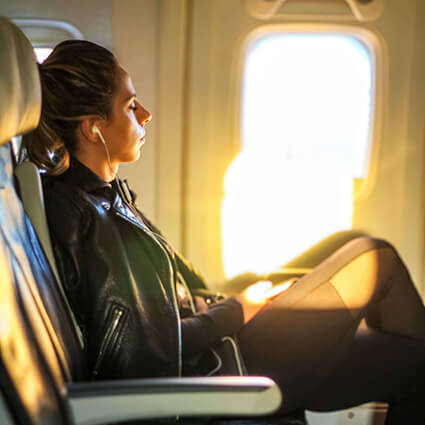
For many of us, flying is simply the part of a journey we have to get through before the holiday begins. But from the body’s perspective, spending several hours inside an aircraft is a surprisingly unusual experience.
Cabin pressure is lower than at sea level. Humidity is extremely low. We remain seated for long periods, our normal eating and sleeping patterns may be disrupted, and crossing several time zones can leave our internal body clock operating on an entirely different schedule from the world around us.
This month’s article looks at what is actually happening during a flight, from swollen feet, stiff backs and expanding intestinal gas to dry skin, UVA exposure at a window seat, circulation, digestion, sleep, immune regulation and jet lag. We also look at something that happens before take-off but is easily overlooked: lifting and manoeuvring heavy cabin luggage.
Most importantly, it separates some common flying myths and offers practical ways to make the journey a little easier on the body.

Positive News: Making Everyday Life a Little Better for Each Other
Positive news does not always have to involve a scientific breakthrough, a major charity campaign or something extraordinary happening somewhere else.
Sometimes we can create a little of it ourselves.
Living in a busy city means sharing space constantly: pavements, trains, lifts, cafés, waiting rooms, parks, queues and public facilities. Most of these encounters last only seconds and involve people we will probably never see again. Yet the way we behave during them contributes to the environment everyone experiences.
And perhaps one of the simplest principles of all: leaving a shared space as we would hope to find it.
That applies to a table in a café, equipment at the gym, a communal kitchen and, yes, the public bathroom.
Modern life gives us plenty of reasons to become caught up in our own priorities. We are constantly checking our phones, answering messages, thinking about the next meeting and rushing from one thing to another. When we are under pressure, it can be easy to become so focused on what we need to do that we pay less attention to the people around us. A little consideration reminds us that everyone else is getting through their day too.
Small acts of consideration interrupt that pattern.
There is something immediately practical about it, too. One person moving their bag from an empty train seat makes somebody else’s journey easier. Someone leaving a washroom clean saves the next person an unpleasant experience. A little patience in a queue prevents unnecessary tension. A smile or a few kind words may be the only friendly interaction somebody receives that morning.
Perhaps this matters most when life feels rushed.
We cannot personally make the train arrive on time, shorten somebody else’s working day or remove all the stresses of living in a large city. But we can decide not to add unnecessarily to them.
It costs very little, requires no special training and is something all of us can practise every day.
Clinic Update
As we move into autumn, this is often a good time to reassess how your body has been feeling and functioning over the summer, particularly if you have returned from travelling, changed your exercise routine or are spending more time at a desk again.
Appointments continue to be available across our Central London locations. Depending on your individual needs, care may include full spine Activator Methods® chiropractic treatment, clinical photobiomodulation therapy, functional movement rehabilitation, postural and breathing guidance, or mindfulness-based support.
Our approach is not simply about treating the place that hurts. We look at the wider picture: how you move, how your body is functioning, what may be contributing to the problem and what can realistically be changed to support your health over the longer term.
Whether you are dealing with persistent pain, returning to activity after a problem, noticing changes in mobility or balance, or simply want to understand your body better, please get in touch and we can help determine the most appropriate next steps.
Contact us to ask a question or arrange an appointment
Thank you, as always, for reading and for continuing to be part of the practice community.
